
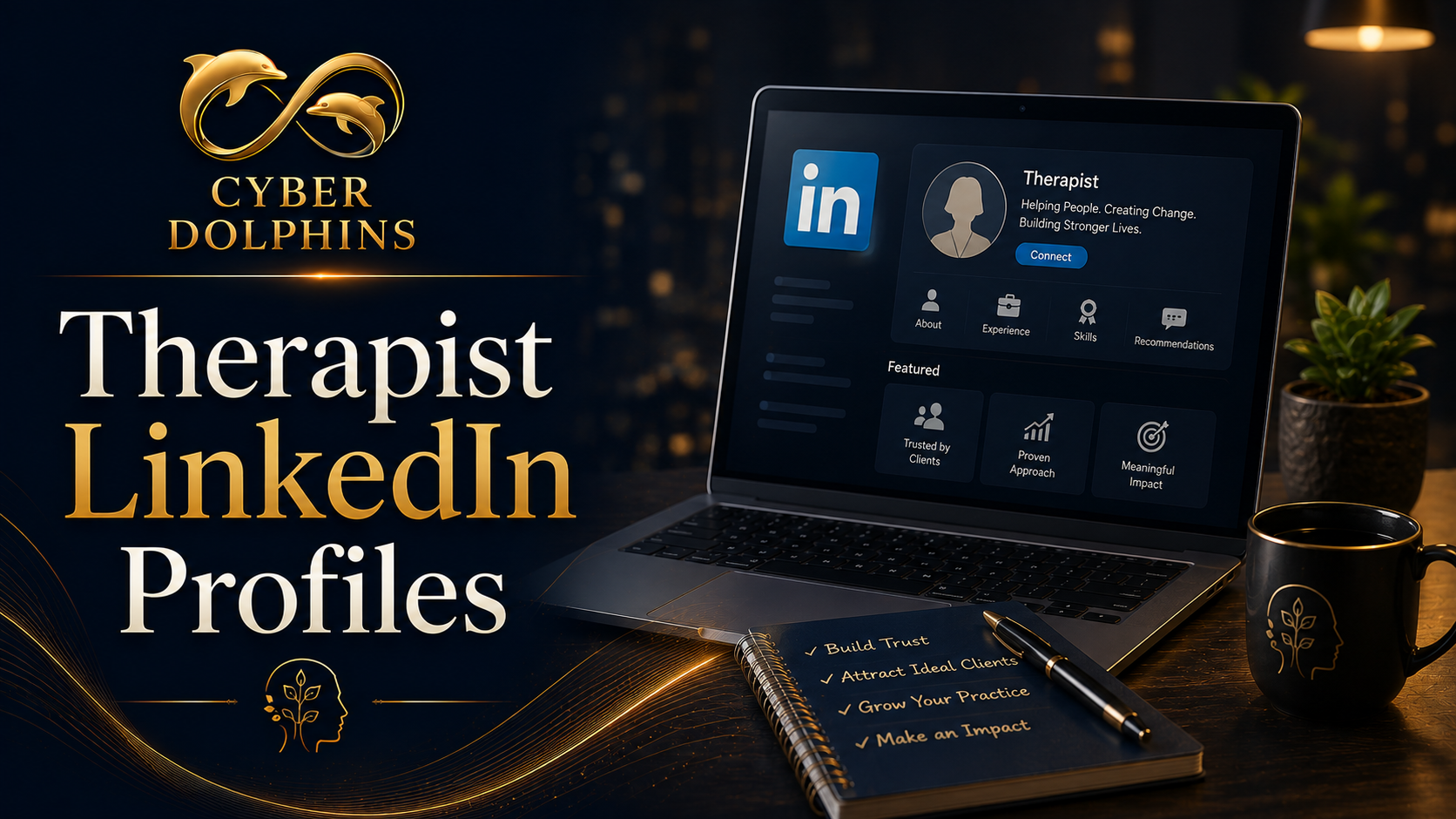
Most therapist LinkedIn profiles look fine on the surface. Good photo, tidy job history, a few kind words in the recommendations section. And yet nothing happens. No messages, no discovery calls, no new clients. The problem usually has nothing to do with visibility and everything to do with what a visitor sees in the first ten seconds after landing on the page.
Therapist LinkedIn profiles are judged fast. A visitor scans the top of the page, decides in a few seconds whether this looks like someone they could work with, and either scrolls on or clicks away. If nothing on the page answers the question in their head, the profile has failed regardless of how many connections or views it has.
This piece is not about posting more or building a personal brand from scratch. It is about the specific, fixable reasons therapist LinkedIn profiles fail to turn a visit into an actual enquiry, whether the practice is based in Toronto, Nairobi, Manila, or Lisbon.
The fixes below apply regardless of where the practice sits or who its clients are. A profile in Sydney and a profile in Berlin fail for the same structural reasons, even when the client base, language, and cultural norms around therapy look nothing alike.
Why Your Headline Ideas for LinkedIn Need to Change
Most therapists default to a job title as their headline. It tells a visitor what the person does but nothing about who they help or why it matters. Strong headline ideas for linkedin name the client and the shift they are looking for, in plain language, without clinical shorthand.
A headline that says only “Licensed Therapist” competes with thousands of identical lines. A headline built around a specific person and a specific struggle gives a visitor a reason to keep reading instead of moving to the next search result.
Testing a few headline ideas for linkedin against real client language works better than guessing. Pulling phrases from actual enquiry emails, in whatever language or tone clients naturally use, tends to outperform anything written from a clinical vantage point.
How to Optimise Linkedin Profile for Therapist Trust, Not Just Polish
Knowing how to optimise linkedin profile for therapist purposes means treating the top third of the page as the only part most visitors will ever see. Photo, headline, and banner all need to work together to answer one question: is this a real, approachable professional.
A generic corporate headshot next to a stock photo banner reads as impersonal, which works against a field built on trust. Learning how to optimise linkedin profile for therapist warmth alongside credibility, rather than choosing one over the other, is what separates a profile that gets read from one that gets scrolled past.
The banner image is worth the extra attention. A plain colour background with the practice name and one line about who is served does more work than a stock image, and it is one of the simplest answers to how to optimise linkedin profile for therapist visibility in a crowded feed.
Where Personal Branding Agency Thinking Fails Solo Practitioners
A personal branding agency built for consultants or founders often pushes a bold, opinionated voice designed to stand out in a crowded feed. That approach does not translate cleanly to a therapist’s profile, where visitors are looking for steadiness rather than a strong personality on display.
Personal branding agency advice aimed at a general audience tends to underweight how much reassurance matters in this field. A profile that borrows loud, attention grabbing language from unrelated industries can quietly undermine the sense of safety a potential client is trying to find.
Templates from a personal branding agency built for a different market can also miss cultural nuance entirely. Direct, self promotional language that reads as confident in one region can read as immodest or even off putting in another, so the tone needs local judgement rather than a fixed formula.
The About Section Nobody Reads to the End
Most about sections open with a biography: where the therapist trained, how many years they have practiced, which modalities they use. All of that belongs on the page, but not in the first two lines, because most visitors never read past them.
Lead instead with the visitor’s situation. A short line naming a common struggle, followed by what working together actually looks like, keeps people reading long enough to reach the practical details lower down.
This single change, reordering the about section, tends to do more for weak therapist LinkedIn profiles than a full rewrite of the rest of the page. It also pairs well with sharper headline ideas for linkedin, since both fixes lead with the client rather than the credential.
Featured Section, Testimonials, and Other Trust Signals
The featured section is one of the most underused parts of a LinkedIn profile. Linking a short article, a media mention, or a clear description of the intake process gives a hesitant visitor something concrete to evaluate before reaching out.
Recommendations from colleagues carry more weight than a self written summary, since they come from someone other than the therapist. A page with two or three specific, credible recommendations tends to reduce hesitation more than an additional paragraph of self description ever could.
Reviewing a handful of well performing therapist LinkedIn profiles in this section alone usually reveals the same pattern: one strong featured link, two to three specific recommendations, and nothing left to guesswork.
How to Get Clients From a Profile Visit, Not Just a View
Learning how to get clients from LinkedIn starts with giving visitors an obvious next step. Many profiles end at the about section with no clear invitation, leaving an interested visitor unsure whether to message, look for a website link, or simply move on.
A visible way to book a consultation, alongside a short line inviting a message, does more for how to get clients than any amount of additional credentials. Clarity about the next step matters more than persuasion at this stage of the process.
Anyone researching how to get clients through LinkedIn specifically, rather than through referrals or a website, should treat the profile as the last step before contact, not the first. Everything above it exists to get a visitor to this one decision point.

Personal Branding Social Media Habits That Undercut a Static Profile
Therapists who are active elsewhere sometimes forget that their LinkedIn profile still needs to stand on its own. Personal branding social media habits built for other platforms, quick updates, casual tone, frequent posting, do not fix a profile page that fails at first glance.
A visitor arriving from a search result rarely checks other platforms first. Personal branding social media consistency helps once someone is already interested, but it cannot substitute for a profile that answers the basic questions on its own.
A common error is applying personal branding social media rules built for platforms with short attention spans to a page most visitors read slowly and carefully. LinkedIn rewards a slower, more complete read, not a scroll.
Why Therapist LinkedIn Profiles Fail the Same Way Everywhere
Reviewing therapist LinkedIn profiles from different parts of the world turns up the same handful of problems, regardless of language or local market. A vague headline in Mumbai fails a visitor in exactly the same way a vague headline in Chicago does. A missing next step in a profile based in Johannesburg loses an enquiry just as surely as it would in Dublin.
What differs across regions is tone and cultural expectation, not the underlying structure. Therapist LinkedIn profiles built for a Japanese audience may lean more formal, while ones aimed at an Australian audience may read more casually, but both still need a clear headline, a warm top section, and an obvious way to reach out.
The Bottom Line
Therapist LinkedIn profiles do not fail because of low visibility. They fail because the page itself does not answer a visitor’s questions quickly enough to keep them there. A clearer headline, a warmer top section, an about paragraph that leads with the client rather than the biography, and a visible next step address the actual reasons a profile stalls.
None of this requires posting more or copying tactics built for a different industry. It requires treating therapist LinkedIn profiles as the first real conversation with a potential client, one that has to work on its own before anything else does.
If you want to grow your LinkedIn profile and want to turn your visitors into qualified leads, contact Cyber Dolphins Today.