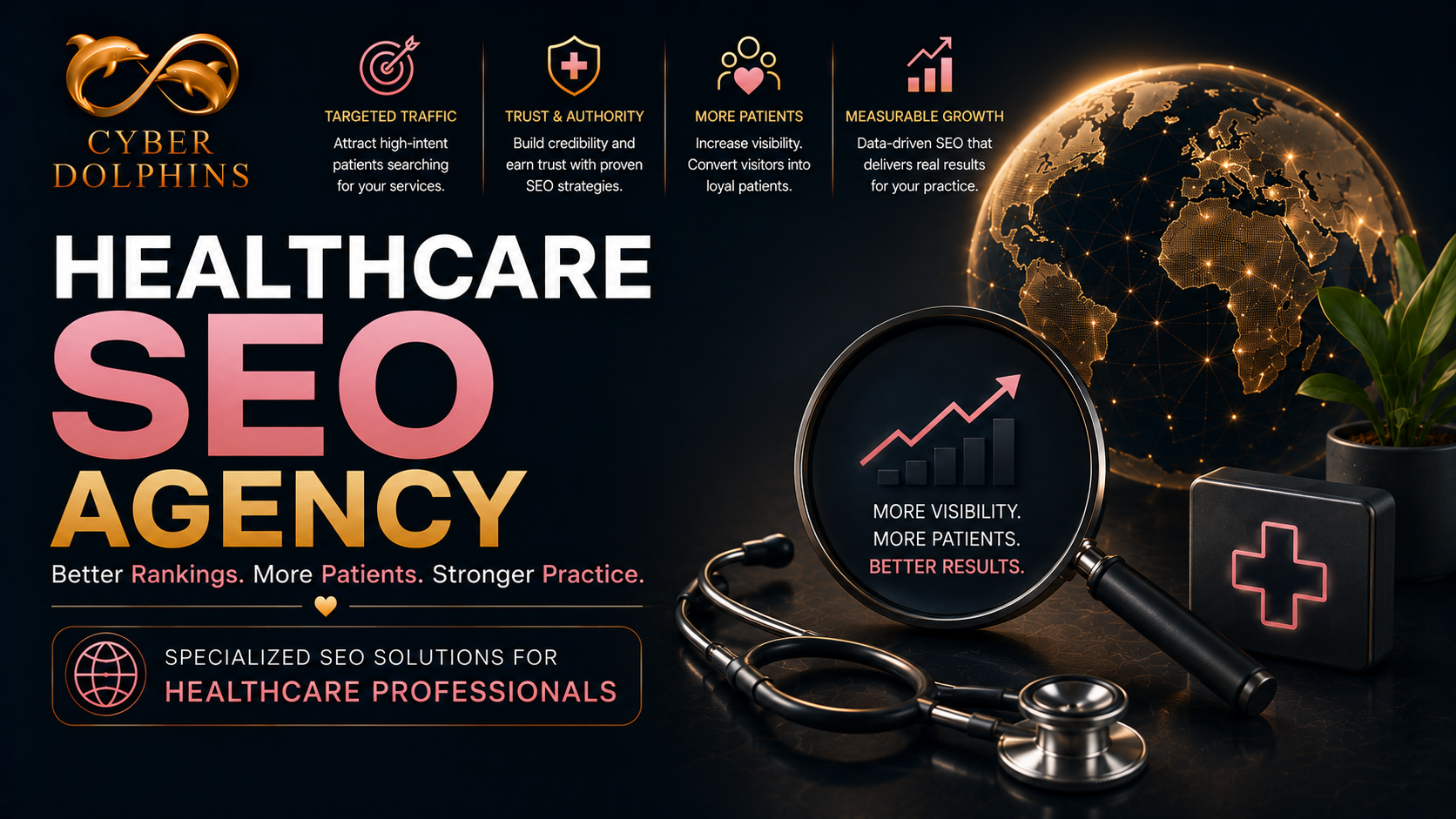
Most practices that invest in SEO get traffic. The ones that work with a specialist healthcare SEO agency get clients.
The difference is not volume. It is relevance. A mental health professional in London, Lagos, or Los Angeles does not need ten thousand monthly visitors to their website. They need thirty people a month who are ready to book, who understand what the practitioner does, and who are the right fit for the work. According to a 2023 report by the National Council for Mental Wellbeing, nearly 60 per cent of adults who sought therapy began their search on Google. That search moment is where the right healthcare SEO agency changes everything for a practice.
A general digital marketing agency can generate traffic. A healthcare SEO agency is built to generate the right traffic, from the right searches, connecting the right people with the right practitioner. This distinction matters more in healthcare than in almost any other field. The person searching is often in distress. The practitioner has ethical obligations. The content must earn trust before it earns a click. Getting this balance right requires more than keyword research and backlinks. It requires a team that understands how people search when they are struggling, and how to position a practice with sensitivity and clinical credibility intact.
Why Most Agencies Fail Mental Health Professionals
Here is something most mental health professionals find out too late. The agency that built a great campaign for a restaurant or a law firm is not automatically equipped to build one for a therapy practice. The stakes are different. The audience is different. The rules, both ethical and regulatory, are completely different.
A specialist healthcare SEO agency is not simply a general agency that has taken on a few therapy clients. The operational difference runs deeper than the client roster. General agencies optimise for traffic and rankings. A specialist agency optimises for clinical fit. That means understanding the difference between someone searching out of curiosity and someone searching because they are ready to act. Someone typing “what is CBT” and someone typing “CBT therapist near me taking new clients” are not the same person at the same moment. A practice’s content strategy should treat them completely differently.
Regulatory and ethical constraints add another layer. Healthcare content in most jurisdictions cannot make outcome promises. A therapist cannot claim they will cure anxiety. A psychiatrist cannot guarantee recovery. A strong healthcare SEO agency builds content strategies that are compliant with these constraints while still being compelling and clear. This is a skill that takes genuine domain knowledge to develop. A general agency often learns this lesson on a client’s dime, and that is a costly way to learn.
Healthcare website design agency work is closely tied to this. Traffic without a well-structured site converts poorly. A healthcare website design agency understands that the design of a mental health practice website carries meaning beyond aesthetics. Clutter creates anxiety. Unclear navigation creates friction at exactly the moment a potential client is already uncertain. The site must load quickly, communicate clearly, and feel safe. These are conversion decisions grounded in the psychology of help-seeking behaviour, not just design preferences.
Healthcare SEO Agency Strategies That Actually Fill a Calendar
The most effective healthcare SEO agency strategies are not the most technically complex. They are the most precisely targeted. Research by Semrush found that long-tail health searches convert at nearly three times the rate of broad searches. Each approach below addresses a specific moment in a searching patient’s journey.
1. Condition-Specific Content Pages
A practice that works with grief, OCD, and relationship difficulties should not have a single generic “we help with mental health” page. A specialist agency builds separate, substantive pages for each presentation, targeting the exact language that searching patients use. This creates multiple entry points into the site and signals to search engines that the practice has genuine clinical depth in specific areas.
2. Practitioner Authority Pages
These are not bio pages. They are full content assets establishing what a practitioner specialises in, what their therapeutic approach involves, and what a potential client can expect from working with them. A healthcare SEO agency that understands search builds these pages with specific keyword targets and connects them strategically across the site architecture so that authority flows across the whole domain.
3. Local and Geo-Targeted SEO
Someone searching for a therapist is often searching within a radius they are comfortable travelling, or within a country they associate with their insurer or cultural expectations. Healthcare SEO agency strategies must account for this geographic specificity, building local signals across citations, structured data, and geo-targeted content where relevant.
4. Multilingual and Cross-Regional Search Strategy
For practices serving international clients, mental health digital marketing services must handle multilingual content, regional search behaviour, and the cultural variation in how distress is described and searched. A practitioner serving clients across Europe, Africa, and Southeast Asia is not facing the same search landscape in each region. A specialist agency maps this complexity rather than applying a single framework across every market.
Your Healthcare Website Design Agency Is Either Closing Clients or Losing Them
Getting someone to your website is only half the job. What happens when they arrive matters just as much, and often more.
The structure of a mental health practice website should guide a visitor from discovery to decision without friction and without pressure. The navigation should make it easy to find the specific help that matches what the person searched for. The contact mechanism should be simple and accessible, not requiring the visitor to justify themselves before they have even spoken to anyone.
Speed matters significantly. Data from Google shows that 53 percent of mobile users abandon a site that takes longer than three seconds to load. A site that loads slowly loses visitors who are in a fragile moment of decision. Healthcare website design agency work that prioritises performance is not technical box-ticking. It recognises that a slow site is a genuine barrier to access. From an SEO perspective, page speed is also a ranking signal. Good user experience and good search performance are the same thing, measured differently.
Trust signals on a mental health website carry particular weight. Accreditation bodies, professional memberships, training credentials, and published writing all contribute to how a site is perceived by both a visitor and a search engine assessing expertise and trustworthiness. A sound healthcare website design agency will audit these elements and ensure they are presented clearly and consistently across every page.
The Ethical Line That Mental Health Digital Marketing Services Cannot Cross
This is the conversation that separates a specialist from a generalist. Most agencies do not have it. The good ones lead with it.
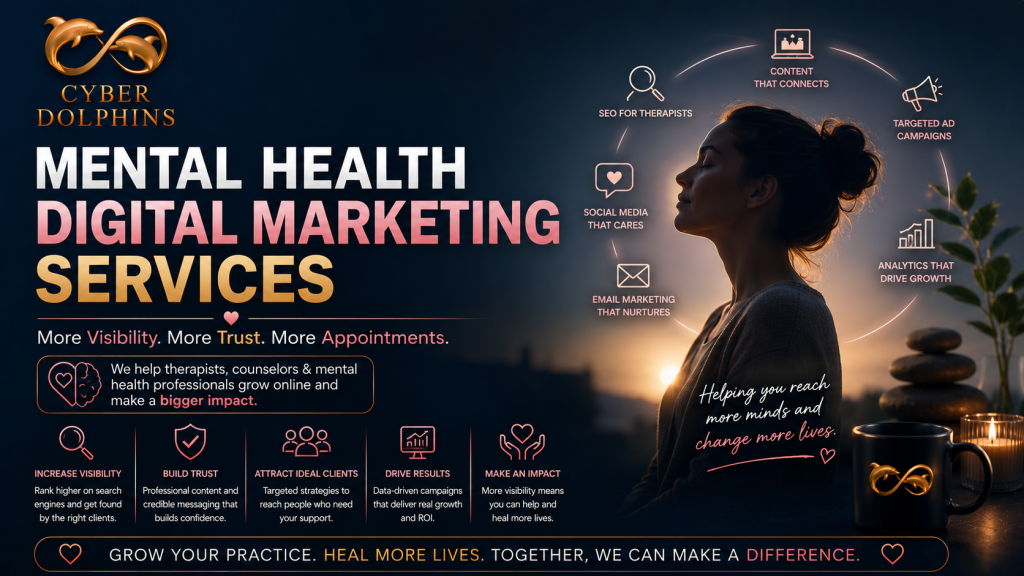
Mental health digital marketing services operate inside a set of constraints that most industries do not face. These constraints are not obstacles. They are the framework within which trustworthy positioning is built. Social proof works differently in mental health. Testimonials from clients raise confidentiality questions. Case studies must be heavily anonymised or avoided entirely. Language used to describe what therapy involves must be measured and careful.
A healthcare SEO agency that understands this builds campaigns around process language, approach description, and professional authority rather than outcome claims. Retargeting and paid social strategies also require particular care. Serving ads to someone who has visited a depression or trauma page raises ethical questions that a specialist must navigate deliberately. Some forms of retargeting that are standard practice in e-commerce are simply not appropriate when the audience is people seeking mental health support. Mental health digital marketing services that do not make this distinction are not built for this space, regardless of how polished their pitch deck looks.
Choosing the Right Healthcare Marketing Agency for a Global Practice
For a mental health professional serving clients internationally, selecting a healthcare marketing agency is a decision with consequences that compound over time. The agency’s understanding of how search behaviour varies across regions matters as much as their technical competence.
Healthcare SEO agency strategies that perform in the United States may not translate to markets in South Asia, Sub-Saharan Africa, or Latin America. Search volume differs. Language differs. Cultural framing of mental health differs substantially. A healthcare marketing agency with genuine global capability researches each market independently rather than applying a template built for one geography across every other.
Mental health digital marketing services for international practices also involve managing a consistent brand identity while adapting content to cultural context. A therapist serving clients in Australia and clients in Nigeria is not presenting to the same cultural frame. The agency must help maintain coherence without flattening the nuance that makes a practice credible in each region it serves.
Cyber Dolphins Is the Healthcare SEO Agency Built for Mental Health Professionals
Most agencies claim to understand healthcare. Cyber Dolphins was built around it.
Cyber Dolphins operates as a specialist healthcare SEO agency with mental health at the centre of everything it does. The team does not rotate between furniture retailers and therapy practices. Every strategy, every content framework, and every campaign is designed with the specific sensitivities, ethical obligations, and search behaviours of mental health clients in mind. According to the World Health Organisation, one in eight people globally lives with a mental health condition. The searches these individuals conduct are some of the most intent-driven in any sector. Cyber Dolphins understands what those searches look like and how to position a practice to meet them with credibility and care.
The healthcare SEO agency strategies Cyber Dolphins applies are built around clinical credibility. That means content reflecting genuine expertise, site architecture that reduces friction for a distressed visitor, and targeted approaches to condition-specific search rather than broad health terms.
For international practices, Cyber Dolphins brings regional search intelligence across multiple markets. The team understands that how someone in Nairobi searches for anxiety support differs from how someone in Toronto does, and that a single global content strategy ignores this at significant cost. Healthcare website design agency work is integrated into the Cyber Dolphins offer because traffic without conversion architecture is waste. Every site built or audited is assessed against clinical trust standards, not just standard UX metrics.
The Bottom Line
A healthcare SEO agency that drives qualified leads is doing something fundamentally different from one that simply drives traffic. The volume question is less important than the fit question. The practices that grow steadily and sustainably are those working with a healthcare marketing agency that understands the clinical context, the ethical constraints, and the specific psychology of how people search for help when they are struggling.
Healthcare website design agency work, mental health digital marketing services, and precise healthcare SEO agency strategies all operate as connected layers. Traffic, structure, trust, and conversion are not separate channels. They are a single system. When that system is built with care by people who understand the space, the result is a practice that attracts the right clients, at the right moment, through search. That is what qualified leads actually means.
Note: This article is not a diagnostic tool and does not replace professional care.
Ready to grow your practice ethically? We help mental health professionals attract the right-fit clients through a psychology-informed digital strategy. Book Your Discovery Call.