

When a group of mental health professionals come together as a network, their collective expertise should be their greatest marketing asset. Most of the time, it is their biggest blind spot.
Solo practitioners compete on personality. Networks compete on depth. That is a stronger hand. But only if the marketing knows how to play it.
The World Health Organisation confirms that one in eight people worldwide lives with a mental health condition. Demand is not the problem for most healthcare associates networks. Visibility is. Clarity is. The gap between what the network offers and what the world can find online is where growth gets lost. This blog closes that gap with strategies that are specific, actionable, and built for how mental health professionals actually make decisions globally.
Build a Healthcare Marketing Strategy Around Network Architecture, Not Individual Profiles
Most mental health network websites make the same mistake. One homepage. One contact form. One message trying to speak to everyone. It speaks to no one.
1. Build a Specialism Landing Page for Every Door Into the Network
Every specialism in a healthcare associates network is a separate entry point. A person searching for trauma support in Nairobi is not the same as someone searching for adolescent therapy in Amsterdam. They need different pages leading into the same network. A strong healthcare marketing strategy builds a distinct landing page for every specialism, every condition cluster, and every regional audience the network serves. Each page targets specific search language. Each page leads to the right practitioner. No one lands on a generic homepage and has to figure out where they belong.
2. Market the Collaborative Gap Between Practitioners
Here is what most networks miss entirely. The space between practitioners is a selling point. A network where a psychiatrist, a somatic therapist, and a CBT practitioner work collaboratively can offer something no solo practitioner can. Coordinated care. Warm internal referrals. A client who starts with one practitioner and needs another does not have to start over. That is a powerful differentiator. A genuine healthcare marketing strategy puts it front and centre. It becomes the headline, not a footnote buried in the about page.
3. Turn the Intake Page Into a Conversion Asset
The intake page is where most healthcare associates networks lose the clients their SEO worked hard to attract. A form with fifteen fields and no human warmth undoes everything. Shorten it. Add a short paragraph above it that acknowledges what it takes to reach out. Explain exactly what happens next and when. This single change consistently improves conversion rates because it respects the emotional state of the person filling it in.
Strategic Marketing for Medical Networks That Works Where Clients Actually Search
Search is not one thing worldwide. It is different in every region. Strategic marketing for medical networks that ignores this leaves entire markets untouched.
1. Map the Language of Distress by Region
People do not search for clinical terms when they are struggling. They search the way they feel. Someone in Lagos might search “I cannot stop worrying.” Someone in Manila might search “feeling empty for no reason.” Someone in London might search “therapist for burnout.” A healthcare associates network serving global clients needs content written in the language of each region’s distress, not the language of clinical manuals. This is the single highest-return content investment a worldwide network can make.
2. Build a Referral Professional Content Channel
GPs, school counsellors, and HR professionals worldwide refer clients to mental health networks regularly. They search too. They search things like “specialist trauma network for complex PTSD referrals” or “psychiatric network accepting GP referrals globally.” Strategic marketing for medical networks should include content written specifically for referring professionals. A dedicated referral page. A clear referral pathway. Content that explains what happens after a referral is made. This channel is almost entirely ignored by healthcare associates networks globally and it is wide open.
3. Build Network-Level Content That No Solo Practitioner Can Match
A healthcare associates network has something no individual practitioner has. Multiple credentialed voices publishing within distinct specialisms simultaneously. A network where five practitioners each publish two substantive pieces per quarter is producing forty pieces of authoritative content annually. Each piece targets a different condition, a different audience, or a different regional search cluster. This is a scale advantage that compounds over time and is structurally unavailable to solo practitioners. A sound healthcare marketing strategy for networks activates this advantage deliberately rather than leaving it on the table.
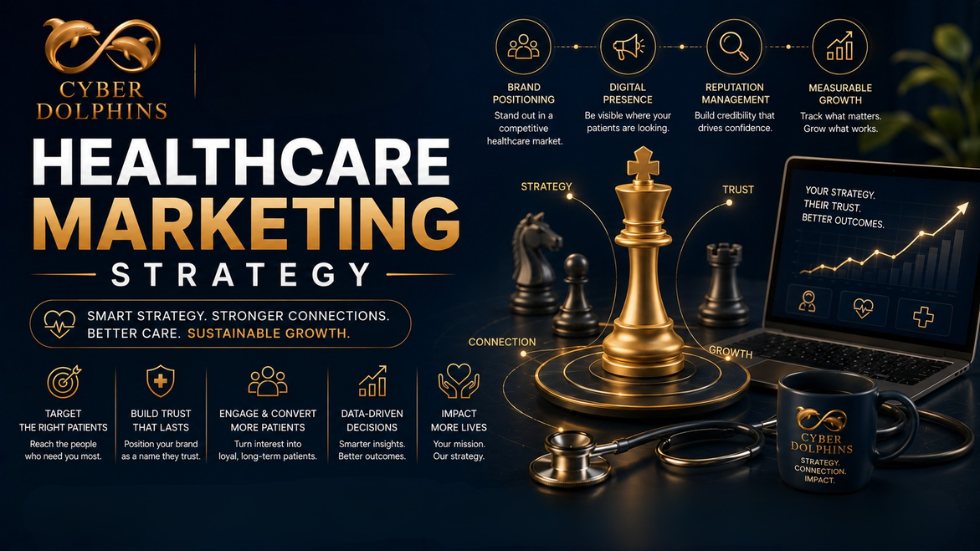
Digital Marketing Hospital Networks: Building Trust Across Regions at Scale
Large mental health networks and digital marketing hospital groups face a trust problem that is different from a solo practitioner’s. More practitioners means more variability. More regions means more cultural complexity. The strategy must build trust systematically, not individually.
1. Use a Unified Brand Voice Across a Diverse Practitioner Roster
When a network grows, individual practitioner pages begin to diverge in tone, language, and positioning. One practitioner sounds clinical. Another sounds conversational. A third has not updated their page in two years. To a prospective client navigating the site, this inconsistency registers as uncertainty. A coordinated digital marketing hospital network maintains a unified brand voice across every practitioner page without erasing individual clinical identity. The network feels coherent. The practitioner still feels human and specific. Both things matter to a searching client.
2. Make Credibility Visible at Every Touchpoint
Accreditations. Published research. Media appearances. Conference keynotes. These signals matter enormously to potential clients and referring professionals worldwide. A digital marketing hospital network should display these signals consistently across every page, not just the homepage. A practitioner page that shows a psychiatrist’s published research and conference presentations is doing more trust-building work than ten paid ads. According to Edelman’s Trust Barometer, peer and expert credibility outranks advertising as a trust signal across every global region measured.
3. Design the Client Journey for Multi-Practitioner Navigation
Most mental health network sites are not designed for the reality of how clients use them. A prospective client may read three practitioner pages, leave, return two days later, read two more, and then make contact. The site architecture should support this non-linear journey. Related practitioner profiles should link naturally to one another. Condition pages should surface relevant practitioners without requiring the visitor to go back to a homepage and start again. This is a structural decision within a healthcare marketing strategy that most networks have not made, and it directly affects how many of the right visitors convert into enquiries.
How Cyber Dolphins Helps Healthcare Associates Networks Build What Others Cannot
Cyber Dolphins does not offer a standard digital marketing retainer repackaged for healthcare. The agency was built specifically around the mental health professional world, and that specificity changes everything about how campaigns are designed and delivered.
For healthcare associates networks expanding globally, Cyber Dolphins begins with audience architecture. Who is searching for this network? In which regions? In what language? With what level of urgency? The answers to these questions determine the entire strategy before a single piece of content is written or a single page is built.
Strategic marketing for medical networks through Cyber Dolphins is built around the collective strength of the network rather than individual practitioner profiles. The specialism landing page architecture, the referral professional content channel, the brand voice alignment, and the regional search localisation are all built as a coordinated system. Not a collection of disconnected tactics.
The ethical sensitivity that mental health content demands is embedded into every deliverable Cyber Dolphins produces. No outcome promises. No exploitative urgency. No messaging that treats distress as a conversion opportunity. Every digital marketing hospital and network campaign is built with the same care that the practitioners within it bring to their clinical work. That alignment between the agency’s values and the network’s values is what makes the work credible. And credibility, in mental health marketing worldwide, is the only currency that truly compounds.
The Bottom Line
Healthcare associates networks worldwide are sitting on a marketing advantage most have not yet activated. Collective expertise. Multiple specialisms. Coordinated care. A healthcare marketing strategy built for networks does not try to mimic what solo practitioners do at greater volume. It does something structurally different. It makes the network itself the product, visible across every region it serves, credible to every audience it is trying to reach, and navigable for every person who arrives searching for help. That is a different category of growth from anything a single practitioner can build alone.
Note: This article is not a diagnostic tool and does not replace professional care.
Ready to grow your practice ethically? We help mental health professionals attract the right-fit clients through a psychology-informed digital strategy. Book Your Discovery Call.